
 Polish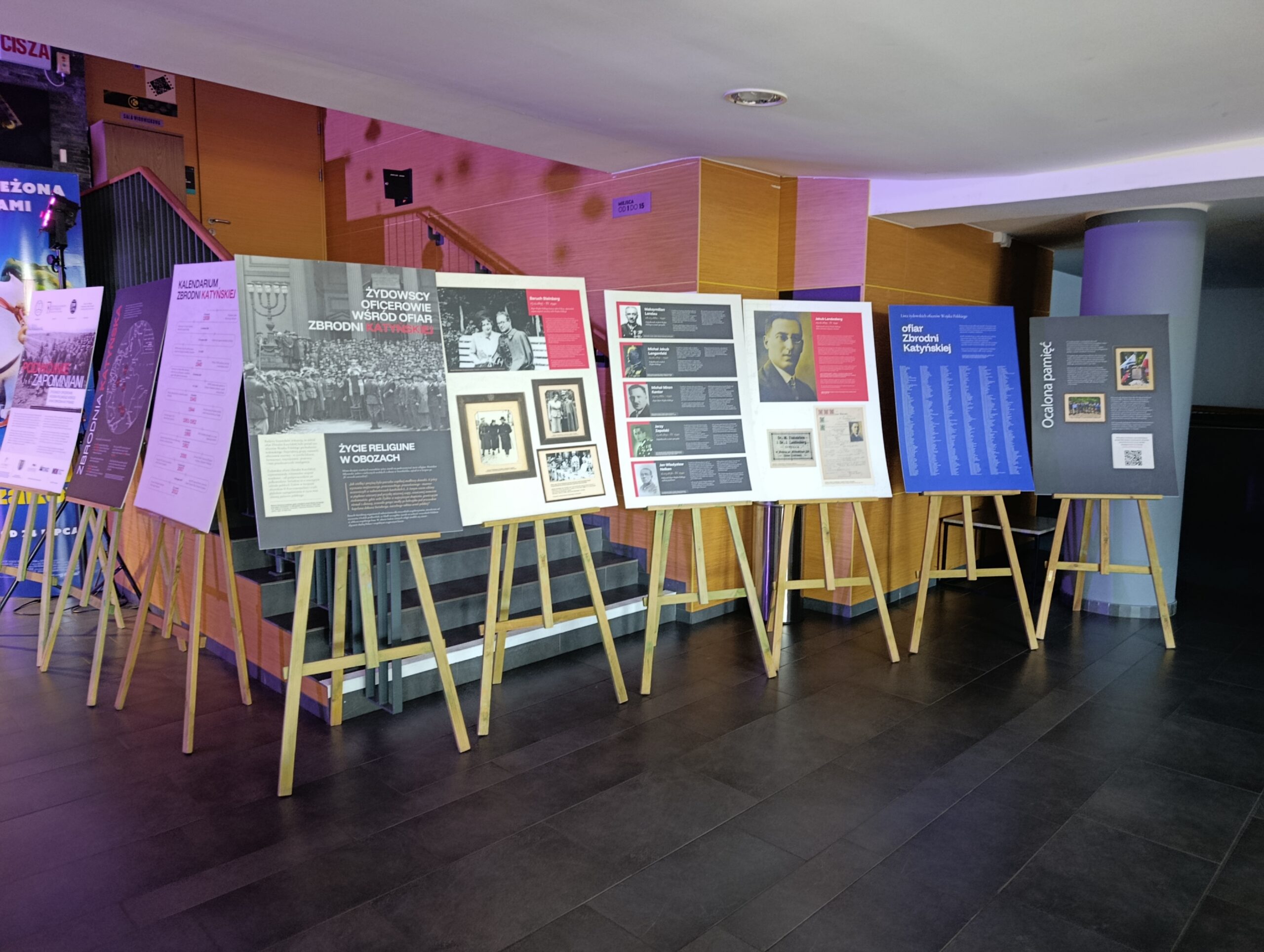

First Exhibition Dedicated to the Polish-Jewish Victims of the Katyn Massacre Is Unveiled in Kutno
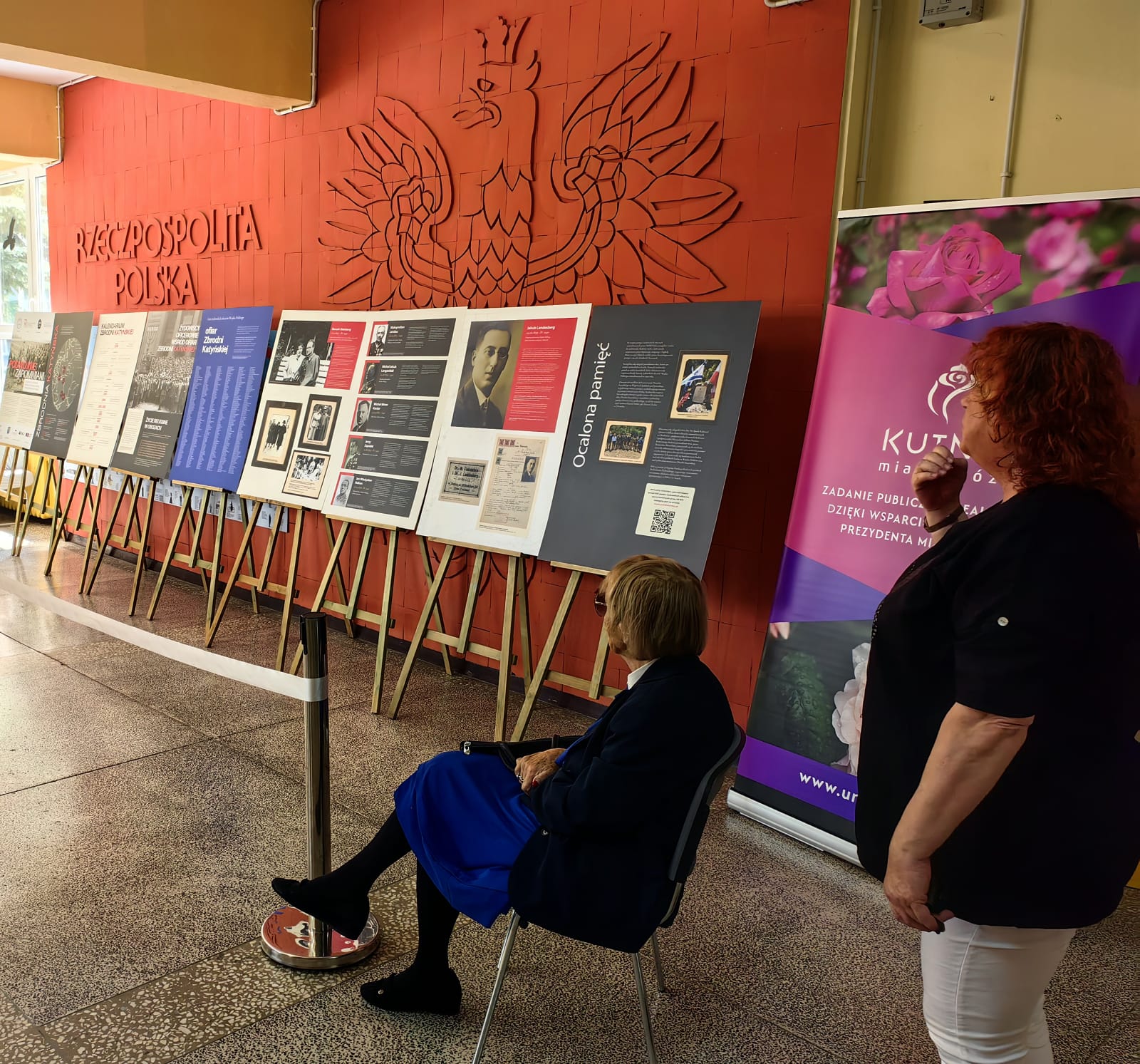
On 21 May 2026, Primary School No. 9 in Kutno hosted the official opening of the first exhibition in Poland dedicated to the Polish-Jewish officers of the Polish Army murdered by the Soviet NKVD in the Katyn Massacre.
The exhibition was made possible through the support of the Municipality of Kutno, under the Honorary Patronage of the Katyn Museum in Warsaw, in cooperation with the Katyn Jewish Families Foundation and the Friends and Jewish Families of the City of Kutno Foundation.
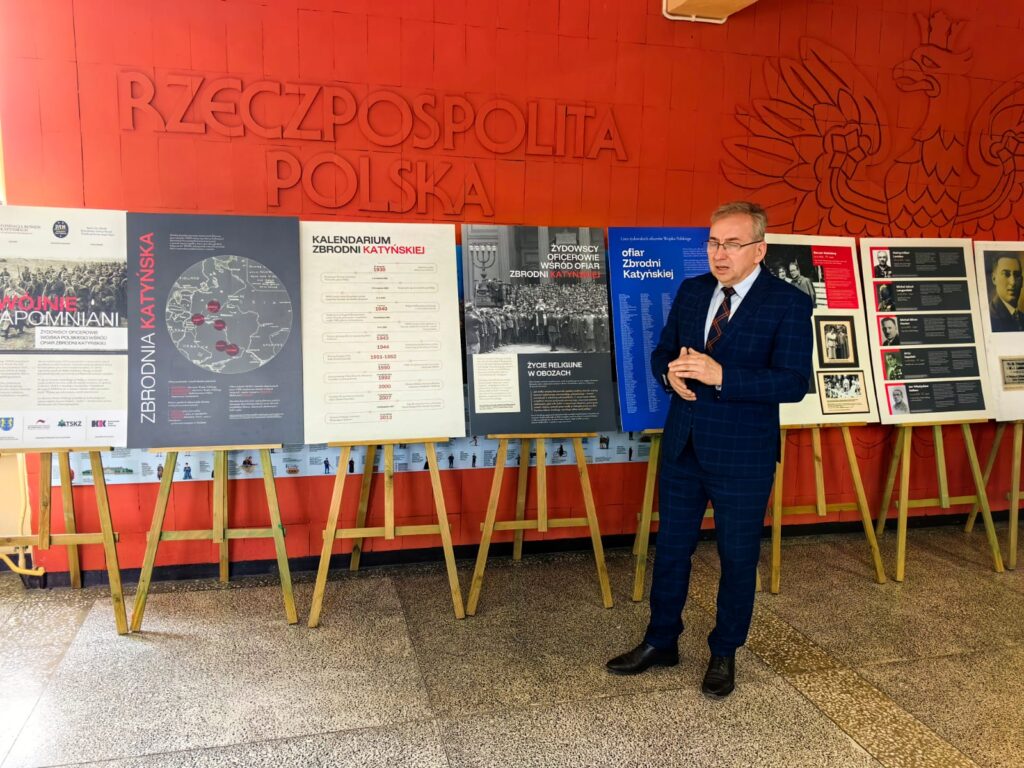
Among those attending were Deputy Mayor Zbigniew Wdowiak, School Principal Iwona Lidia Pietrzak, representatives of local government, teachers, students and members of the local community.
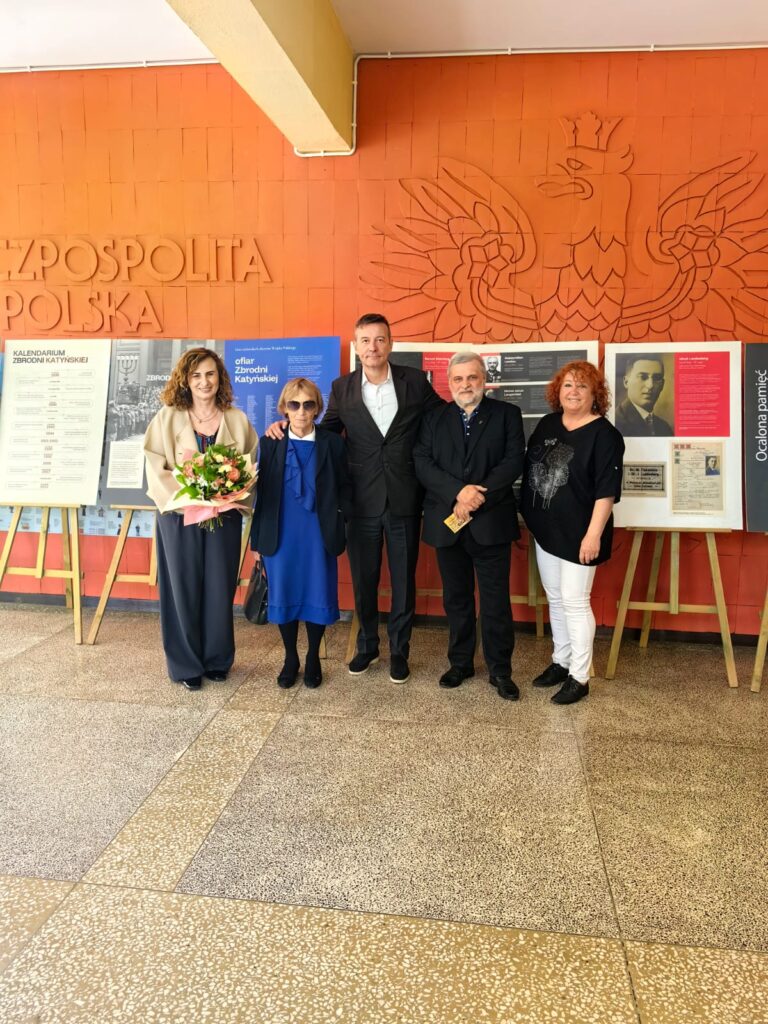
Special guests included Wanda Albinska, born in Kutno and the daughter of Dr Halina Rotstein, a physician in the Warsaw Ghetto who chose to remain with her patients until her deportation to the Treblinka death camp, and her son Luc Albinski, President of the Katyn Jewish Families Foundation.
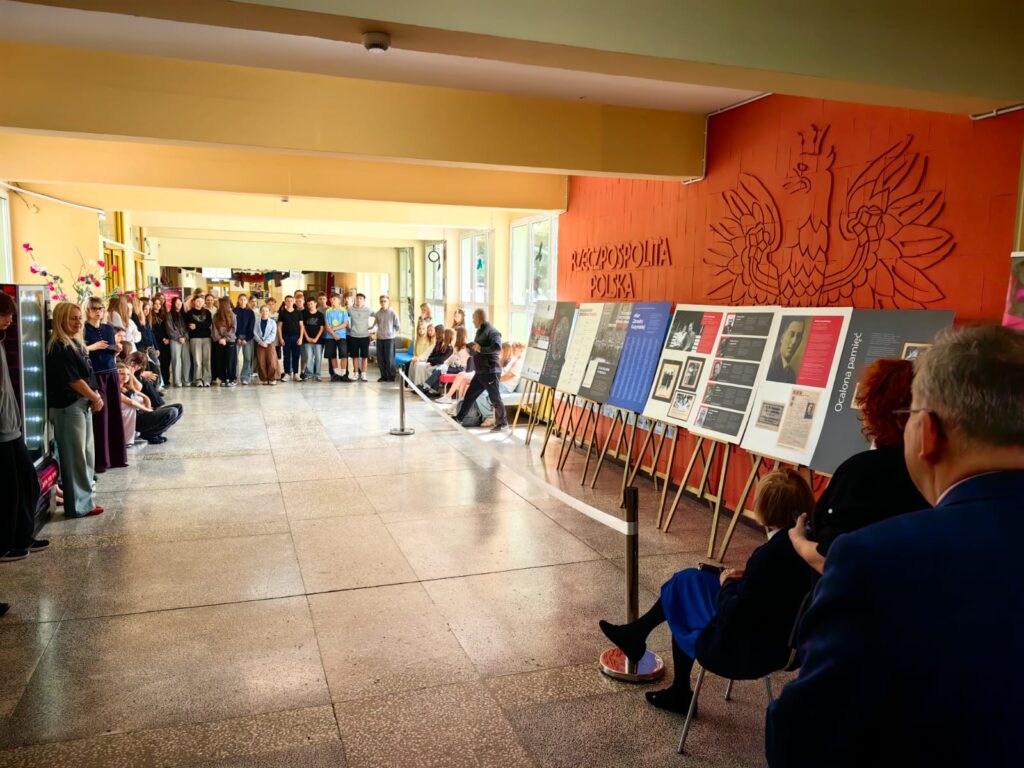
The exhibition tells the stories of Polish‑Jewish officers murdered at Katyn, Kharkiv and Mednoye and highlights the often-overlooked fact that hundreds of Polish citizens of Jewish origin were among the victims of the Katyn Massacre.
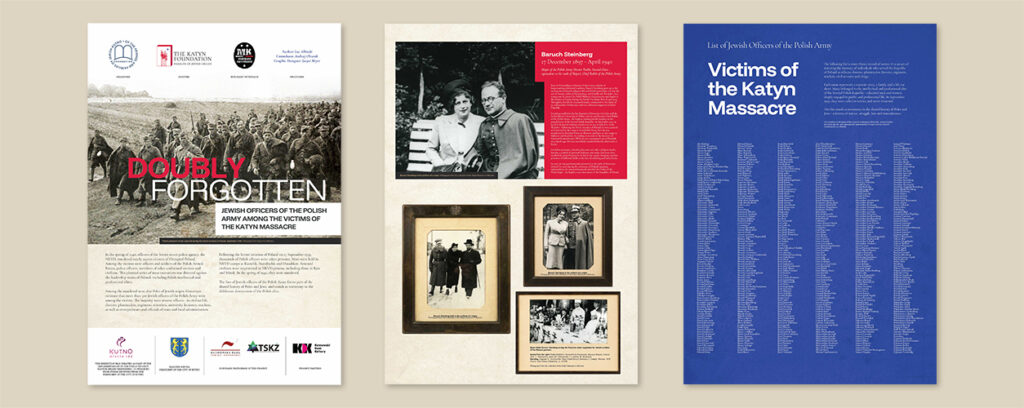
An important partner in the project was the Friends and Jewish Families of the City of Kutno Foundation, which has long been engaged in preserving and promoting Kutno’s multicultural heritage. Special recognition is due to Bożena Gajewska, whose commitment, energy and determination played a central role in organising the exhibition and accompanying events.
The visit to Kutno also included a screening of the documentary “Nobody Told Me”, telling the story of Dr Halina Rotstein and her family.
The project was made possible through the efforts of many dedicated individuals, including Bożena Gajewska, Andrzej Olewnik and Jacqui Meyer.
The exhibition represents another stage in the work of the Katyn Jewish Families Foundation to document and commemorate more than 500 Polish‑Jewish officers murdered by the NKVD in 1940. The Foundation maintains an online memorial cemetery at www.zydzikatynscy.pl.
It is hoped that the exhibition will travel to other cities in Poland.
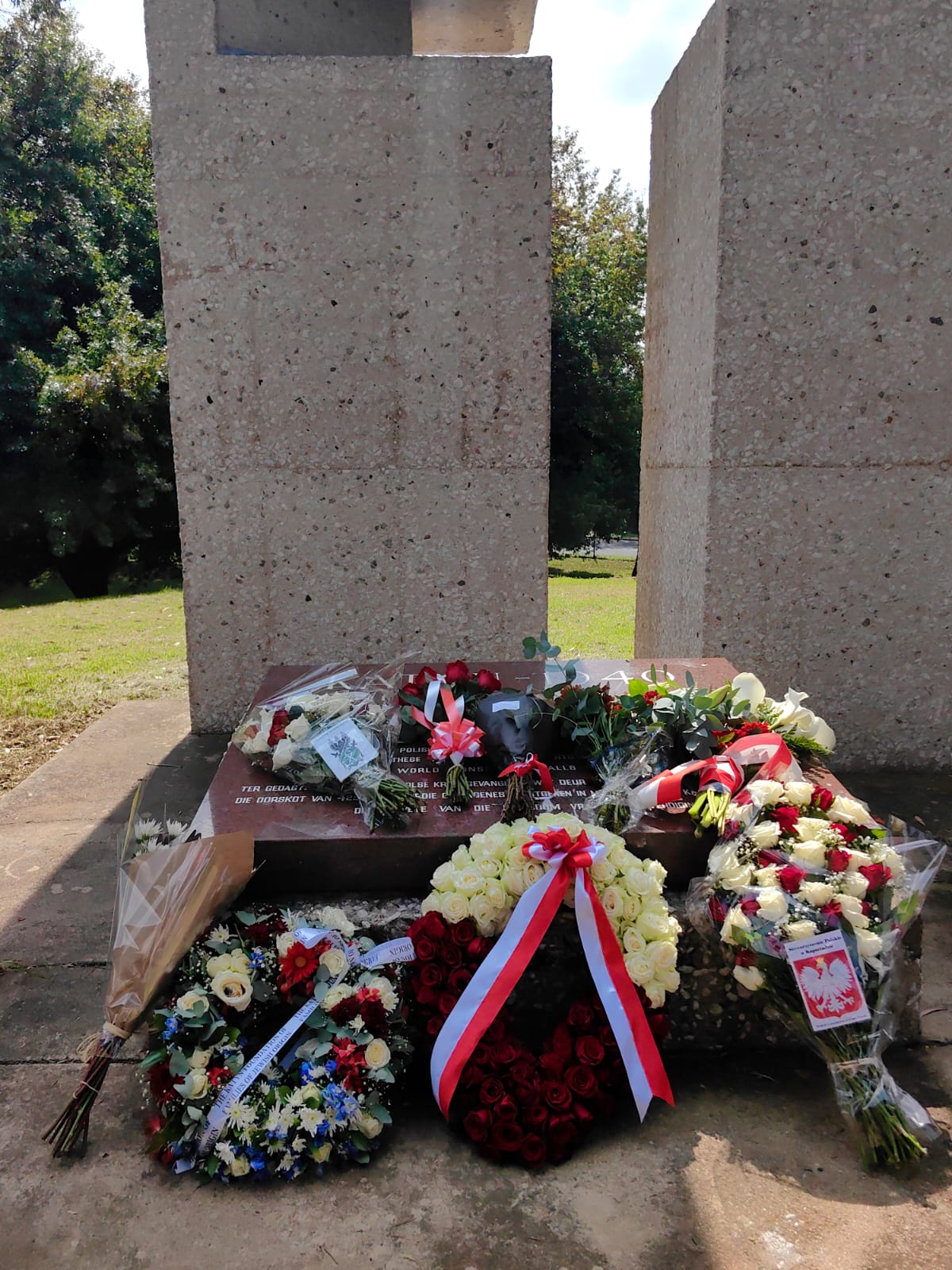
Day of Remembrance for the Victims of the Katyn Massacre in Johannesburg
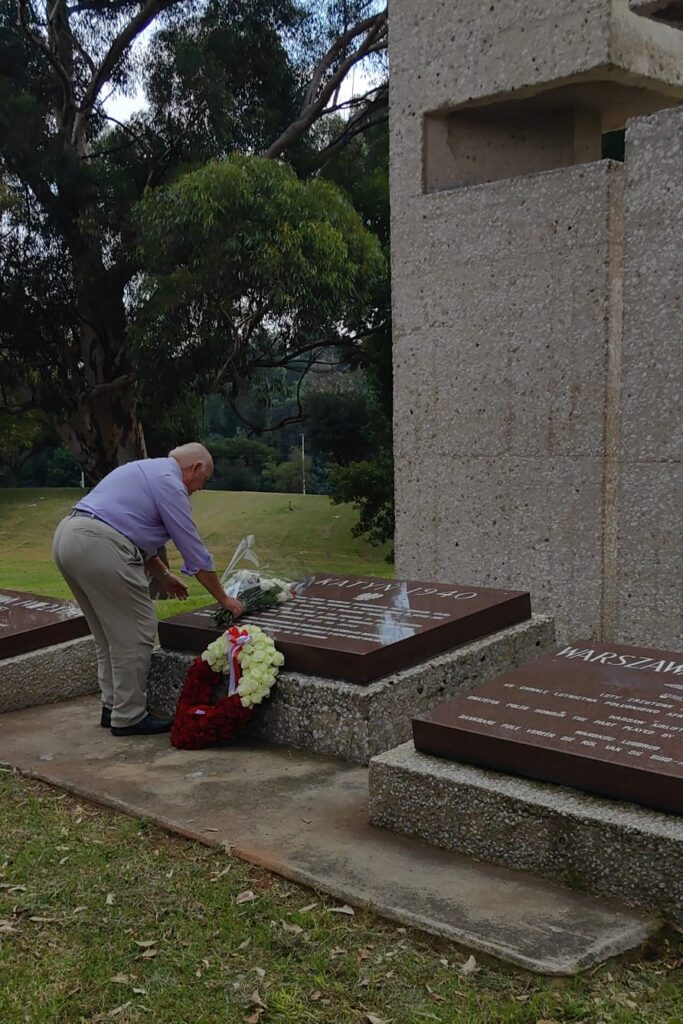
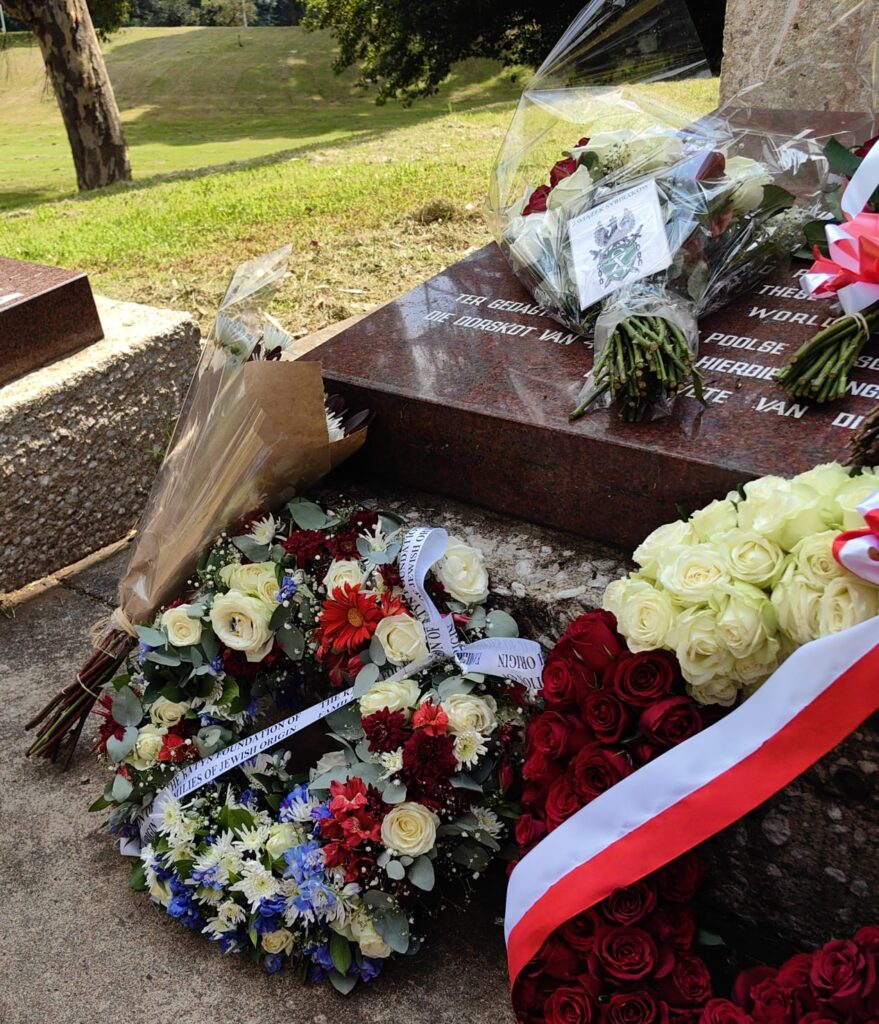
A solemn wreath-laying ceremony was held on Sunday, 12 April 2026, at the Katyn Memorial in Johannesburg, bringing together representatives of the Polish diplomatic corps, the Polish community, and survivor organisations to honour the victims of the 1940 Katyn Massacre.
The ceremony took place at the memorial in James and Ethel Gray Park in Melrose, a site long regarded as the focal point of Katyn remembrance in South Africa. Erected in 1981, the monument commemorates more than 22,000 Polish officers, police, and members of the intelligentsia murdered by the Soviet NKVD during World War II.
Leading the commemoration was the Ambassador of the Republic of Poland to South Africa, Jacek Chodorowicz, joined by members of the Polish diplomatic mission, including Consul Robert Rusiecki. Wreaths were laid on behalf of the Embassy of the Republic of Poland as part of the annual observance.
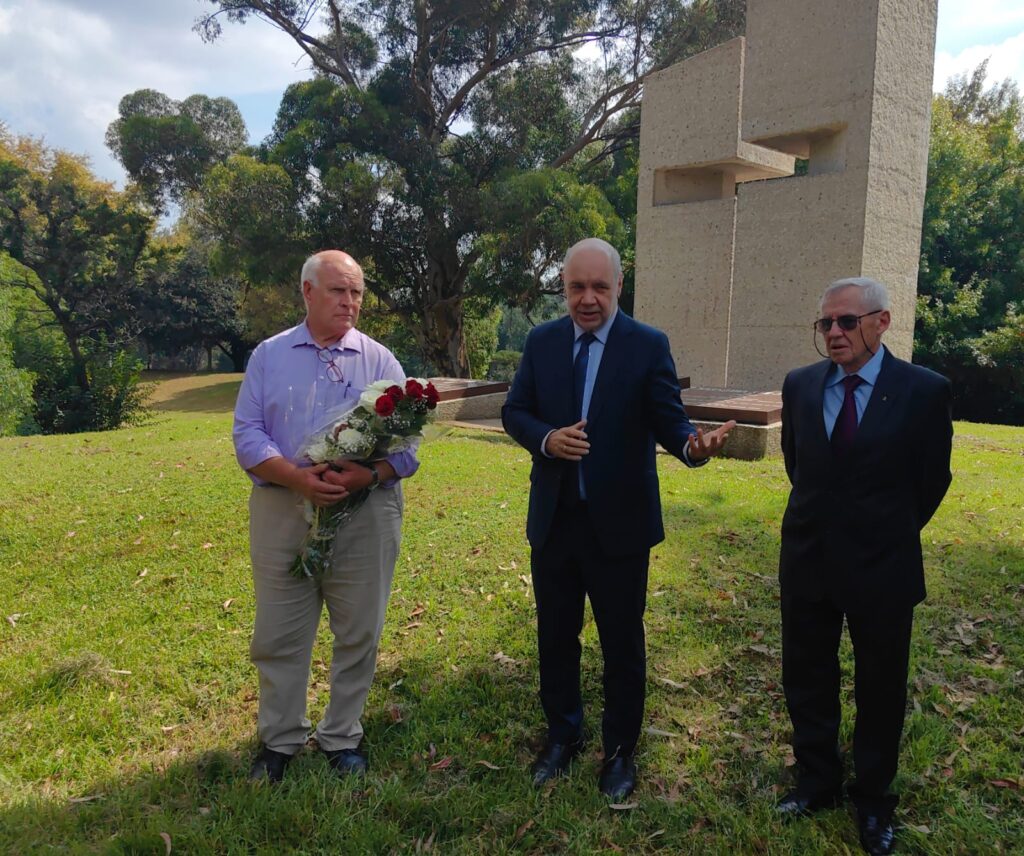
They were joined by representatives of the Polish community in Johannesburg, alongside cultural and historical organisations that continue to preserve the memory of Katyn within the diaspora.
Also in attendance were members of the Association of Siberian Deportees in South Africa (often referred to as the Siberian Association), whose members laid a wreath in remembrance of those deported to Soviet labour camps during the same period.
The ceremony included prayers, moments of silence, and reflections on the enduring legacy of Katyn. Speakers recalled not only the scale of the atrocity but also the decades during which responsibility for the massacre was denied, underscoring the importance of historical truth.
A further dimension of the commemoration was the remembrance of the hundreds of Polish Jewish officers who were among the victims of Katyn. Representatives of the Katyn Foundation for Jewish Families noted that more than 500 Jewish officers—doctors, lawyers, engineers and reservists drawn from across Polish society—were murdered alongside their fellow officers. Their stories, long underrepresented in broader narratives of Katyn, form an integral part of the tragedy and its legacy. The Foundation continues to work to document these lives and ensure that their memory is preserved within both Polish and Jewish historical consciousness.
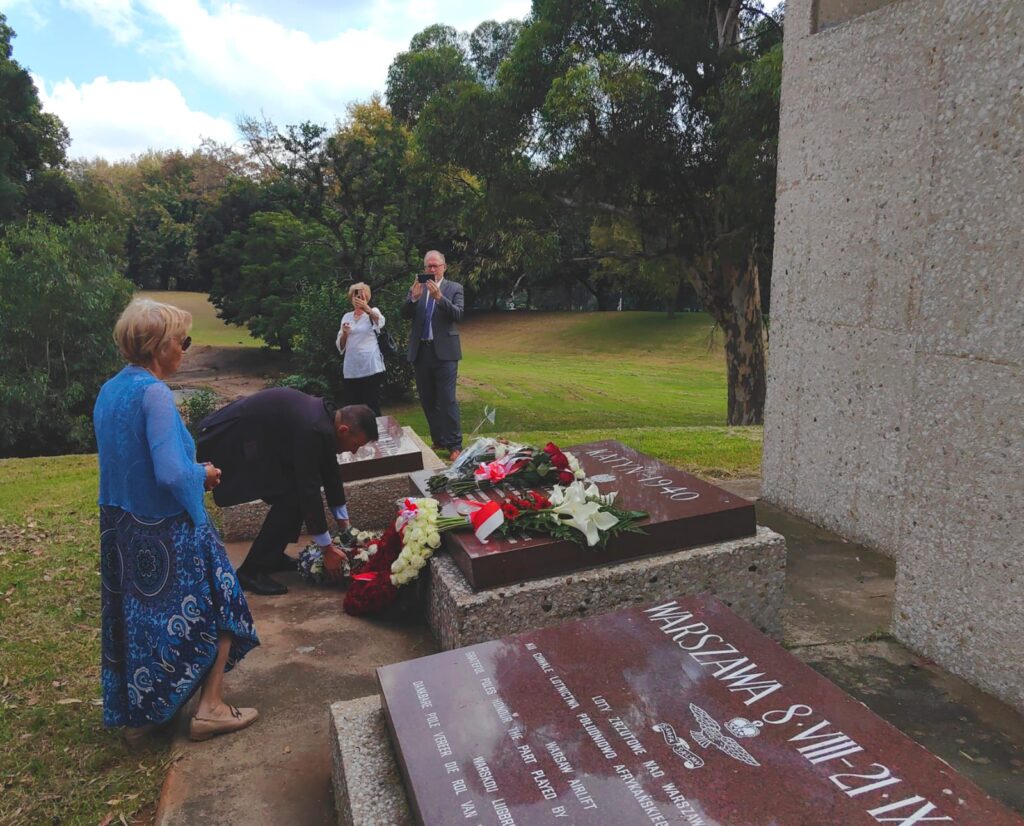
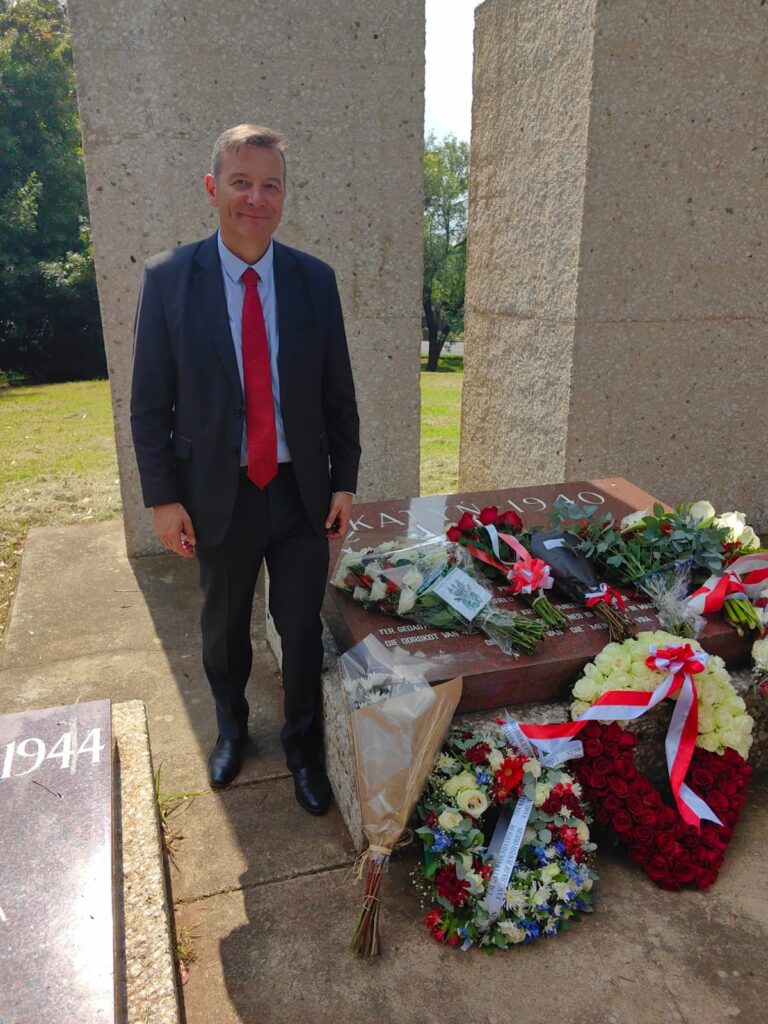
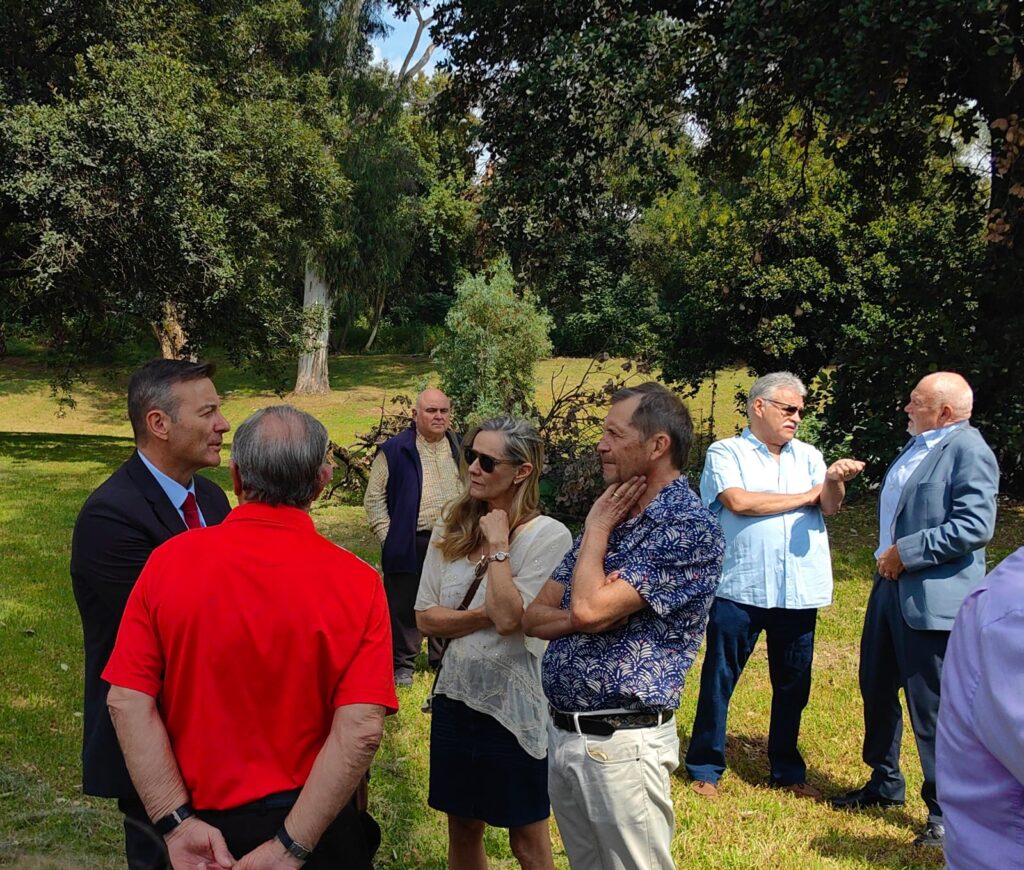
The Johannesburg Katyn Memorial holds a unique place among international commemorative sites. In addition to honouring the victims of Katyn, it also recognises South African airmen who participated in Allied supply missions to Warsaw during the 1944 uprising, symbolising a shared wartime connection between Poland and South Africa.
As wreaths were laid and candles lit, the gathering reaffirmed a simple but enduring message: that remembrance remains both a duty and a form of justice.
Katyn Memorial Commemoration on 28 April 2025
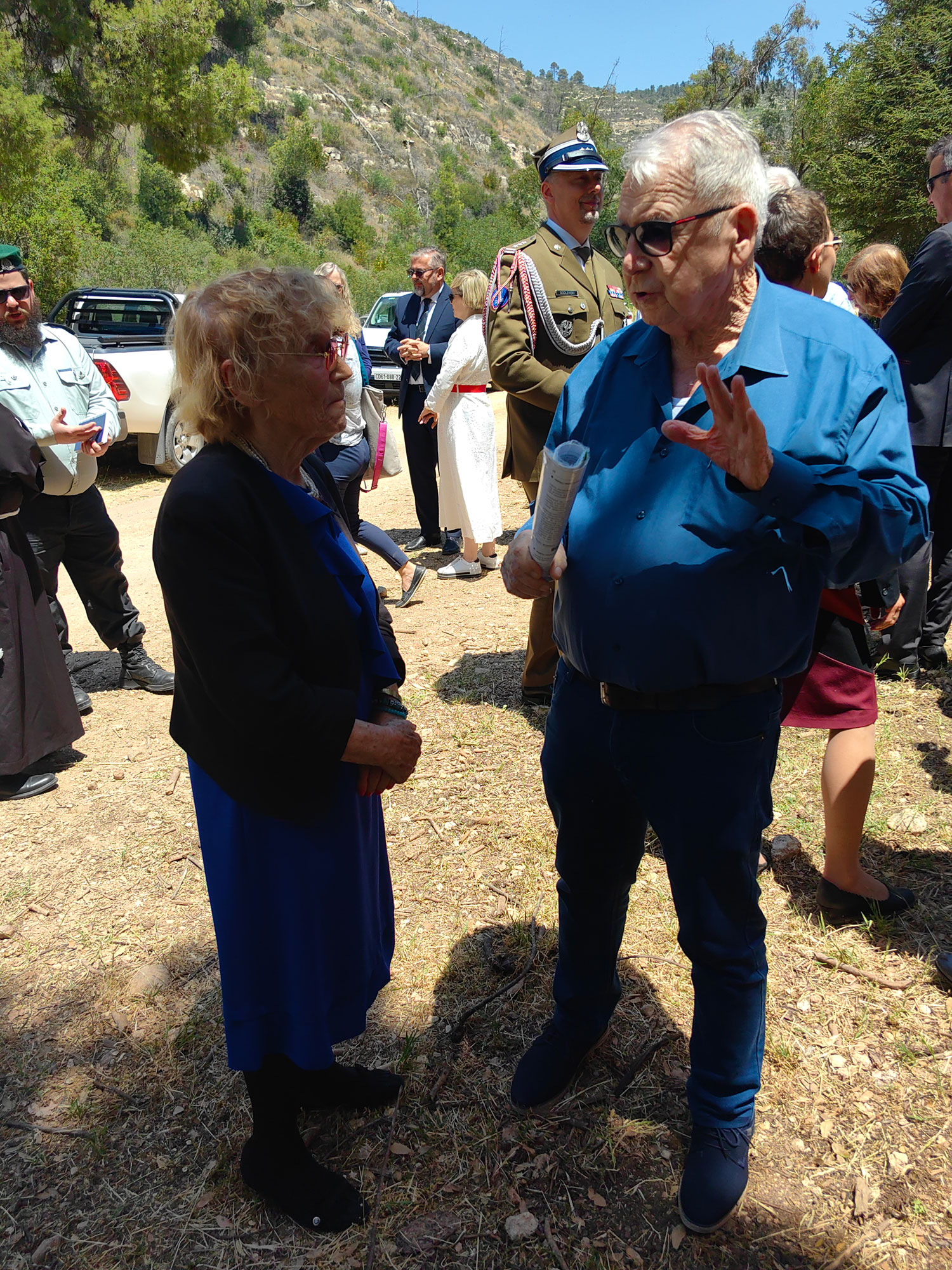
On 28 April 2025, Luc Albinski represented the Katyn Foundation for Jewish Families at the annual Katyn memorial commemoration that took place at the Katyn monument in the Judean Hills outside Jerusalem. The event was attended by the Polish Ambassador to Israel, Maciej Hunia, the Polish defence attaché, Colonel Adam Godlewski, as well as several members of the Polish embassy staff. A representative from the Ukrainian military Serhii Samborskyi, also attended the event. Giora Bar Nir represented the families at the event and delivered a moving speech.
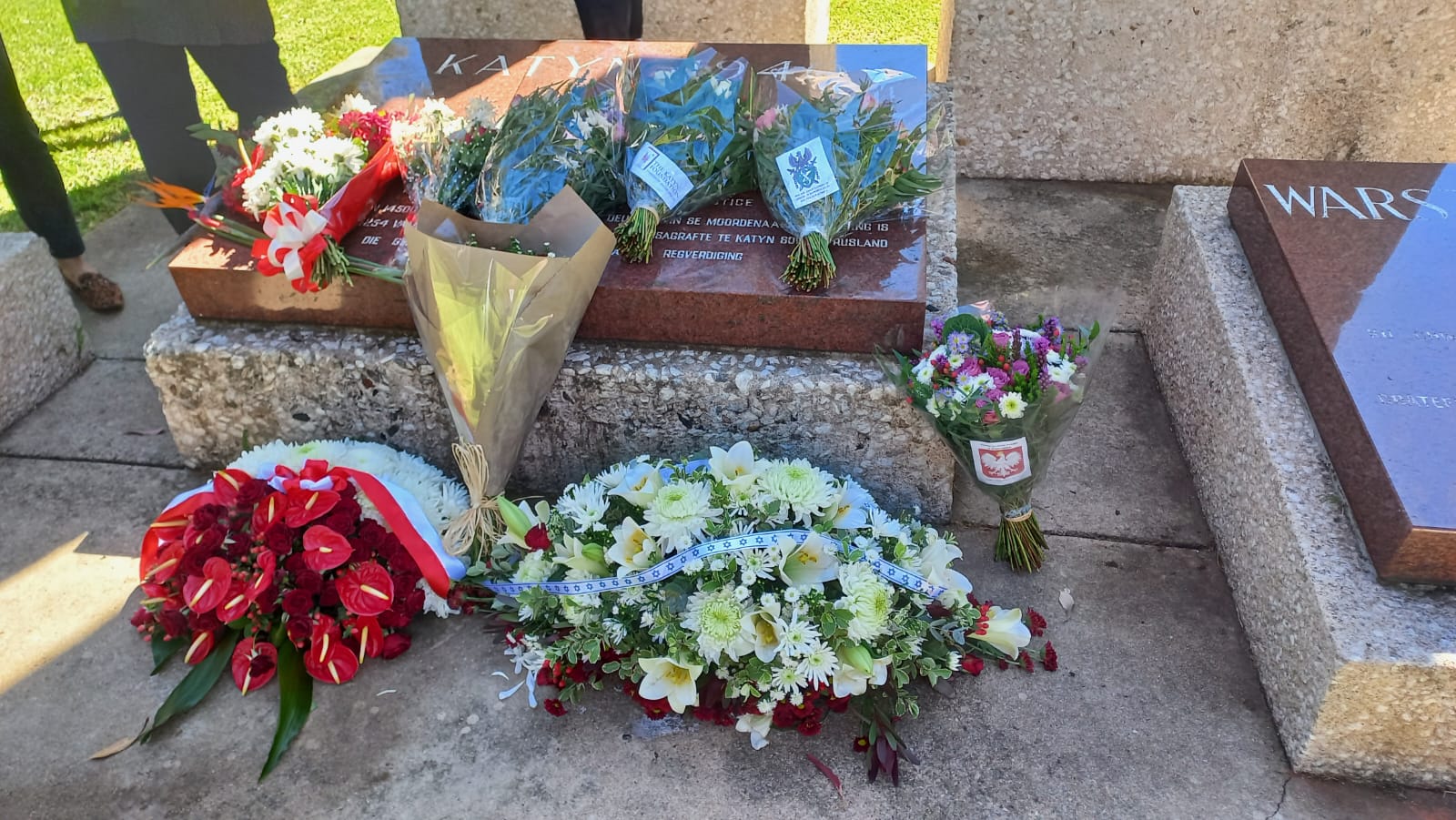
Ceremony at the Katyn Monument in Johannesburg on May 20, 2024
A ceremony took place at the Katyn Memorial at the James and Ethel Gray Park in Johannesburg to commemorate the Katyn massacre in the presence of the Polish Ambassador to South Africa, Adam Burakowski, representatives of the Polish Association of Siberian Deportees and Aimee Mica Ntuli, the representative of the Katyn Foundation for Families of Jewish Origin. Aimee Goldsmith laid a wreath on behalf of the Foundation.
The monument was designed by Andrzej Romanowicz and Adam Snopek as the architects and Leonard Rynkiewicz as the structural engineer. Bishop Szczepan Wesoły consecrated the completed Memorial on 9 May 1981. The central stand contains soil from Katyn; on the left soil from the Polish Home Army insurgents’ graves in the Powązki Cemetery; and on the right from the place of the crash of Jack van Eyssen’s Liberator of the South African Airforce in Michalin near Warsaw.
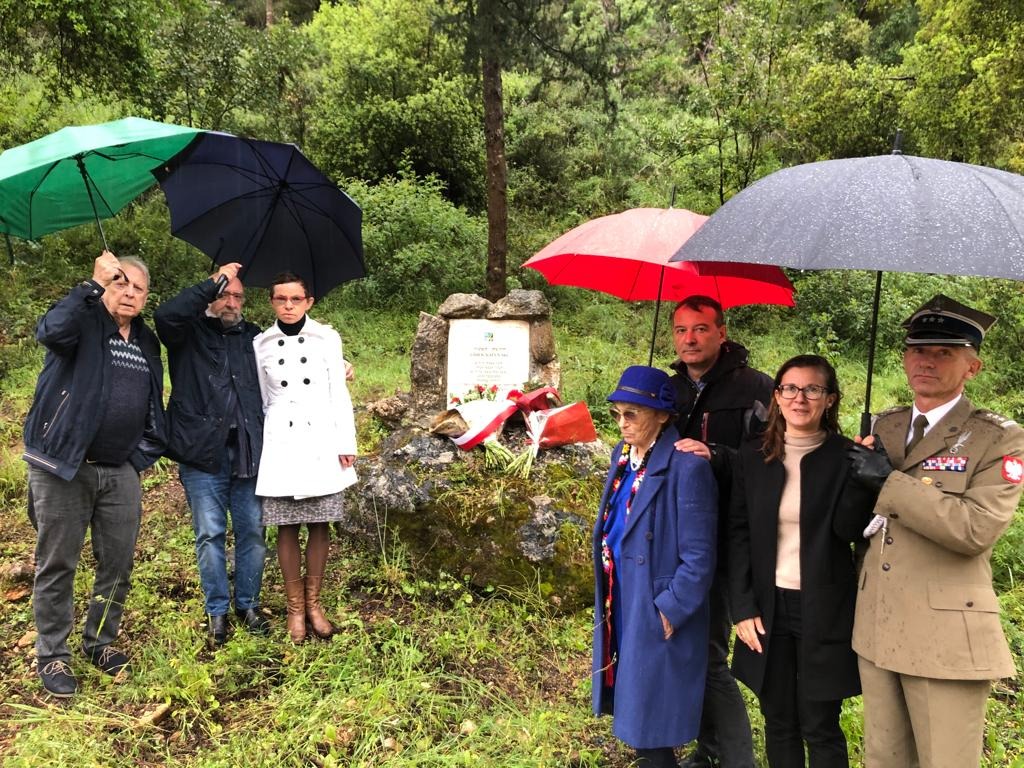
Ceremony at the Katyn Memorial in the Judean Hills outside Jerusalem on April 13, 2023
A short rain swept ceremony was held today at the Katyn Memorial in the Judean Hills outside Jerusalem to mark Katyn Day, a day of remembrance of the Katyn massacres committed by the Soviet secret police in April-May 1940 during which almost 22,000 Polish officers were murdered whilst prisoners of war. Amongst the murdered officers, were several hundred Polish Jewish officers. Present at the ceremony were representatives of the Polish embassy in Tel Aviv including the First Secretary and the Defense Attache as well as Giora Bar Nir, who lost a father, Lieutenant Emanuel Rabiner, in Katyn and Luc Albinski, the President of the Katyn Foundation for Jewish Families.

The Polish-Jewish Tragedy of Katyn: A Webinar Reflection on 4 April 2024
A webinar entitled “Not Entirely Forgotten” devoted to the fate of the Polish Jewish officers of Katyn took place on 4 April 2024. It was organized by the Cape Town, Durban and Johannesburg Holocaust & Genocide centers and chaired by Jakub Nowakowski, its director, and the vice-president of the Katyn Foundation for Families of Jewish Origin. The President of the Katyn Foundation, Luc Albinski, participated in the well-attended webinar along with Giora Bar Nir who movingly described the fate of his father, Emil Emanuel Rabiner, an engineer and a Lieutenant in the Polish Army, who was murdered in the forests of Katyn.
Giora survived the Warsaw Ghetto (1940-43) and escaped at age six to live on the so-called Aryan side of Warsaw before ending up in a village called Ruda Ós near Radzymin under a false identity. After the war, Giora spent time in Warsaw and Lodz in the care of an uncle and a family friend from his time in the Ghetto before emigrating to France where he spent two years in an orphanage near Lyons. In 1948 he left for Israel arriving at the age of 12 during the War of Independence in his new homeland. Giora adopted a new name, completed his studies, and embarked on an illustrious career in the Israeli Airforce attaining the rank of a Lieutenant Colonel fighting in several wars as a navigator. Giora with his now-deceased friend Janina Goldhar worked on developing a list of all the Polish Jewish officers that were killed in Katyn. With some persistent effort, he also got Yad Vashem to recognize the Katyn victims.